Germany under Nazi rule
The Boys in the BoatGermany under Nazi rule emerges as both a system of intensifying coercion and a state carefully staging its appearance before the world. The preparations for the 1936 Olympics make that doubleness visible: Adolf Hitler and Joseph Goebbels sought a spectacular image of a modern, peaceful Germany even as the regime suppressed the press, persecuted people on racial grounds, imprisoned political opponents, and began rebuilding its military power.
Ideology and the capture of journalism
Hitler had initially regarded the Olympics as an affront to Nazi racial ideology. The Olympic ideal required athletes of different nations and races to meet and compete on equal terms, while the Nazi Party asserted Aryan superiority. Hitler had condemned the games the previous year and recoiled at the prospect of Jews, Black people, and other people whom the regime classified as racially alien visiting Germany. His view changed during the first eight months of his rule, as Goebbels made the political usefulness of hosting the games increasingly clear.
Goebbels’s power rested not only on spectacle but on control of communication. A committed antisemite who had helped engineer Hitler’s political rise, he was systematically dismantling what remained of a free German press. His outward manner could disarm people who met him socially; his fluency and forceful speaking voice also served him in speeches and radio broadcasts. The contrast between that persuasive public presence and the machinery of repression is central to the book’s portrait of his influence.
That week, Goebbels assembled 300 Berlin journalists to explain Germany’s 1933 National Press Law. Journalism henceforth required a license through the Reichsverband der Deutschen Presse, and no one with even one Jewish grandparent, or married to someone with one, could receive that license. Editorial work was likewise restricted: material that failed to serve the party’s interests was forbidden, including anything deemed capable of weakening the Reich, German unity, military spirit, culture, or economy. The government also enacted a separate measure making publication of treasonable articles punishable by death. Together, licensing, racial exclusion, ideological censorship, and the threat of execution transformed journalism from a public check on authority into an instrument subject to state discipline.
The Olympic project and its staged promise
Goebbels recognized that hosting the Olympics could present Germany to other nations as civilized, modern, friendly, and powerful. Hitler came to see the same value in an attractive international image: an Olympic interlude could help secure time and credibility for a government whose longer-term plans included rebuilding military and industrial strength. The proposed welcome to the world was therefore not separate from the regime’s ambitions; it was part of how those ambitions were to be managed abroad.
On October 5, Hitler inspected the old Deutsches Stadion with Werner March, president of the German Olympic Organizing Committee Theodor Lewald, and interior minister Wilhelm Frick. The stadium had been built in 1916 by March’s father, Otto, for Olympic Games canceled because of World War I. Its location connected the planned spectacle to a landscape of national memory: the Grunewald Forest lay to the west, while the historic rooflines and church spires of Berlin rose to the east. Renovation was already underway for the 1936 games, but Hitler rejected a limited expansion. Because the neighboring horse-racing track obstructed enlargement, he ordered it removed and demanded a stadium capable of holding at least 100,000 people, along with a unified Reichssportfeld containing venues for many competitions. March had only until the next morning to prepare preliminary plans. The scale and urgency of the assignment made the site itself a projection surface for the regime’s claims about German ingenuity, cultural superiority, and growing power.
The planned display of peace stood beside a deteriorating international situation. On October 14, Hitler withdrew Germany from the League of Nations and ended its disarmament talks with France and its allies, undermining the postwar settlement associated with the Treaty of Versailles. The Olympics’ promise of cooperation thus ran alongside a repudiation of the arrangements intended to preserve European peace. The book presents the contrast not as a coincidence but as a political use of the interval: a reassuring public face could buy time while the regime strengthened the resources behind it.
Repression and rearmament beyond the stadium
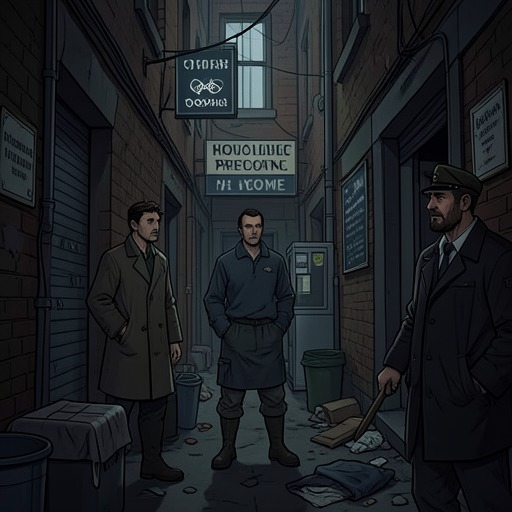
The state’s coercive reach was apparent beyond the newsroom and the Olympic grounds. That fall, storm troopers assaulted Americans and other foreign nationals in German cities when they refused to give Nazi salutes. The United States, Britain, and Holland warned Berlin of serious consequences if the attacks continued. Richard Tyler, dean of engineering at the University of Washington, returned from Germany and reported that people were afraid to express even trivial opinions; criticism that could be interpreted as unflattering to the Nazis could lead to arrest and imprisonment without trial. By then, the regime had already imprisoned thousands of political dissidents at Dachau, a camp opened in March near the medieval village of the same name.
Military preparations supplied a further measure of the distance between the regime’s peaceful presentation and its conduct. After Germany abandoned disarmament talks, the book describes the withdrawal as effectively repudiating the Treaty of Versailles. Friedrich Krupp AG had secretly begun work on an initial order of 135 Panzer I tanks. Observers in Panama had also noted a sharp increase in shipments of Chilean nitrates, used in making munitions, traveling through the canal under blind sailing orders toward the Azores; their ultimate destination remained unknown. These reports make the Olympic promise of a friendly, peaceful Germany legible against the concealed movement of armaments and materials for war.
The contrast was compounded by how little these warnings changed opinion abroad. Tyler’s account and more sinister reports, including those by Jewish emigrants, largely went unheard in the United States. In a University of Washington student poll, 99 percent opposed allying with France and Britain against Germany. The book places that response beside the expanding evidence of intimidation: the regime’s public image was not merely built in Berlin but received, or left unchallenged, by audiences elsewhere.
Sport, class, and international standing
The Olympic project drew its force from sport’s existing prestige. During the 1920s and 1930s, collegiate rowing attracted major crowds and extensive press attention; nationally prominent sportswriters covered regattas, and fans followed crews through the racing season. The sport’s traditions, however, were bound to social rank. Eastern private schools modeled rowing on elite British institutions such as Eton, and their oarsmen moved into prestigious universities. In the West, the University of California, Berkeley and the University of Washington built a public-university rivalry that drew tens of thousands to annual regattas, yet western programs remained less well funded and less respected by the eastern center of collegiate rowing. Their struggle for recognition helps explain why an international event could carry stakes beyond the water: athletic distinction offered institutions and regions a way to claim standing.
The sport’s class boundaries were not confined to the United States. At the Henley Royal Regatta, rules dating from 1879 barred people who worked for wages as mechanics, artisans, or laborers. Australian policemen were classified as laborers and excluded; angered, they left Britain for Berlin determined to challenge the British crew there. The British eight, drawn from Oxford and Cambridge and associated with the Leander Club, embodied the established prestige of the sport. This episode exposes a tension within the wider Olympic spectacle: international competition could bring together crews from different countries, while inherited rules still restricted participation according to occupation and social status.
The American crew’s own place in that system was precarious. After its success at Princeton, the Washington team was told that it might have to pay its own way to Berlin, despite having won the right to go. The working-class rowers could not supply the money, and the threatened loss of their place revealed how quickly athletic achievement could be subordinated to financial access. Seattle residents then raised funds through donations, tag sales, appeals, and contributions from the rowers’ hometowns; Joe Rantz’s hometown of Sequim sent $75, and the campaign secured a $5,000 certified check. Those details do not make the American funding crisis equivalent to Nazi repression. They do show that the Berlin games joined sharply different contests over status: a dictatorship sought to shape the world’s perception through monumental architecture and controlled messaging, while athletes and supporters struggled to secure access to the competition itself.